
Analysis
As lead content strategist, I began with a full audit of the platform experience to identify friction points, gaps, and content challenges from both the creator and fan perspectives. I also conducted a competitive analysis to assess where the platform was differentiated and where it was vulnerable. I synthesized to map the platform’s core challenges and highest-priority opportunities.
The audit surfaced something the engagement metrics alone hadn’t made obvious: the existing tagging system had been built by the product team using internal logic, labels that described what content was rather than what an audience member was trying to find or do. A fan looking for beginner tutorials on a topic had no reliable way to surface them. A creator with years of archived content had no way to connect it to new subscribers who would have valued it. I also examined the existing platform structure, engagement metrics and audience research.
Solution
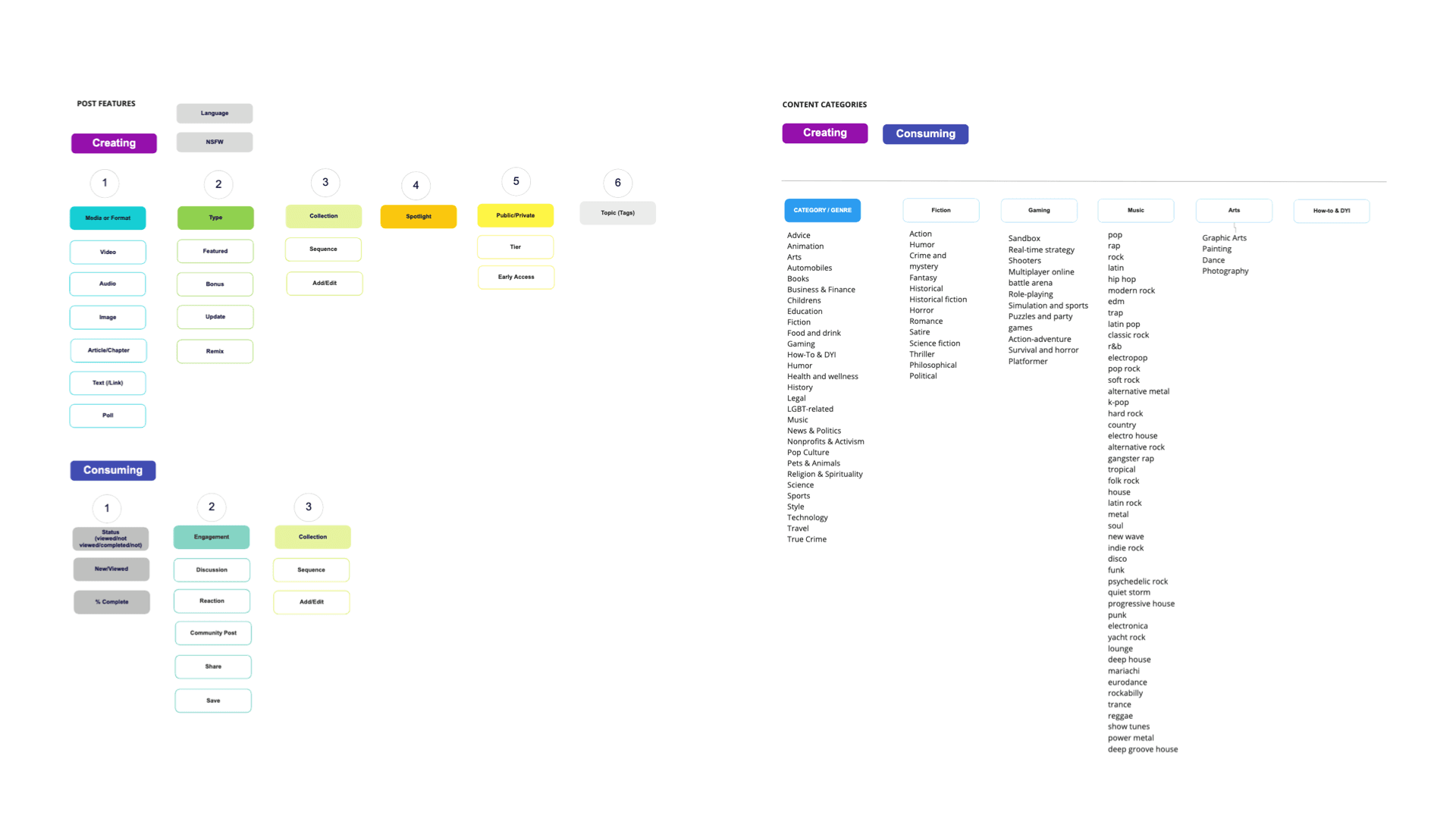
To develop a new, comprehensive taxonomy and tagging system, I borrowed from two platforms that had solved this problem at scale: The Library of Congress and Netflix. Library science solves it through hierarchical classification; streaming solves it through layered genre and format taxonomy. Both approaches informed the new system.
I categorized content at the top level by medium and genre, covering everything from animation and music to poetry and video, and then by type (how-to, biographical, and others), language, and additional criteria. I then developed guidelines for a tagging system that preserved creator flexibility, allowing unique tags, while introducing a standard tagging layer that ensured consistency across the platform. The result was a taxonomy that served multiple purposes at once: fans could find relevant content, new audiences could discover creators through their interests, and the platform gained the organizational infrastructure to surface the right content at the right moment.
Outcome
The combination of new features, taxonomy, and tagging improved clarity and consistency across the experience in ways that served both sides of the platform. It became easier for fans to find relevant posts and for creators to have their work resurface organically. User engagement and time on platform increased. Creator burnout eased as the pressure to produce constantly gave way to a system that made existing content continue to work. New pathways for creator discovery drove broader revenue and retention across the platform, and the feature set gave the platform meaningful differentiation from competitors.