

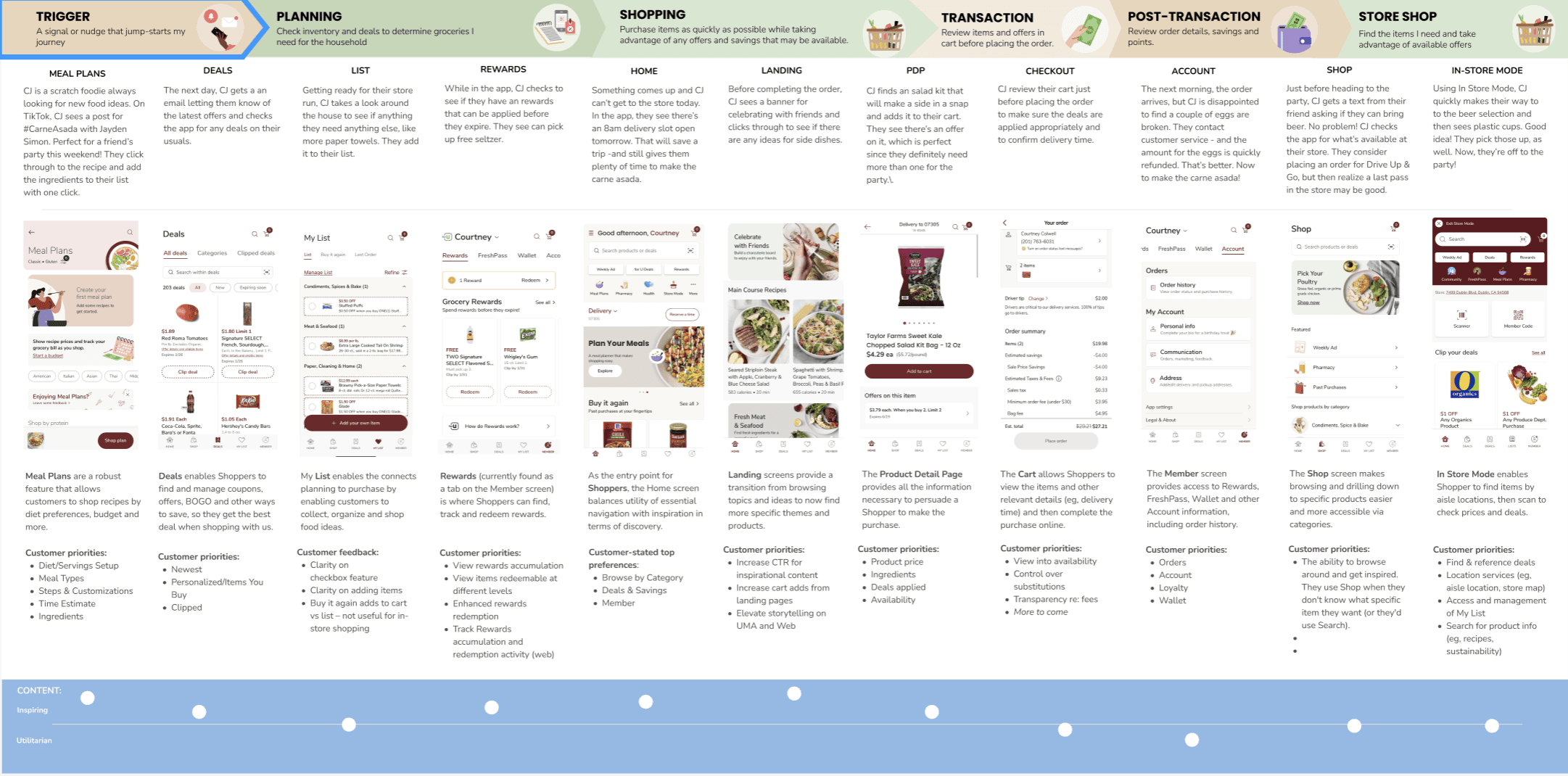
I began with a content audit, mapping every content type (tutorials, marketing, transactional, error states, empty states) against its purpose and the user’s likely mindset at that moment. I then benchmarked against best-in-class e-commerce experiences to understand how other brands with strong voices introduced personality without letting it get in the way of utility.
Analysis
One guardrail became immediately clear: certain messages were off-limits for the more branded voice. For example, when a user hits an error, they’re already frustrated. A food pun in that moment doesn’t land as delightful, it reads as the brand making light of their problem.
I also compared the in-store experience to the digital, which gave me the analogy that ended up framing the entire approach: in a grocery store, you’re greeted warmly at the door, thanked genuinely at checkout, but given space and efficiency in the aisles. The brand voice in e-commerce needed to work similarly: present and warm at entry and exit, but stepping back when customers are “in the aisles.”.
Solution
With that framework in place, I identified the specific screens where brand voice wasn’t just acceptable but genuinely additive: home screens, onboarding, recipe features, and empty states. Empty states in particular earned a lighter touch — when a user’s list is blank or a search returns nothing, there’s no task to interrupt and no frustration to avoid. It’s a low-stakes moment that actually benefits from a little personality.
Outcome
Before the Sincerely platform, an empty list screen read something like: “Your list is empty. Add items to get started.” Functional, but forgettable. The new version: “No list yet? Lettuce start one.” The surprise creates a small moment of delight that makes the brand feel alive.
I wrote new copy in the Sincerely voice for key screens across the experience, creating a consistent set of moments where the brand’s personality could show up enough to register, but restrained enough to never get in the way.